


How to Choose Between Sphagnum Moss and Clay When Attaching Moss to Rocks and Wood

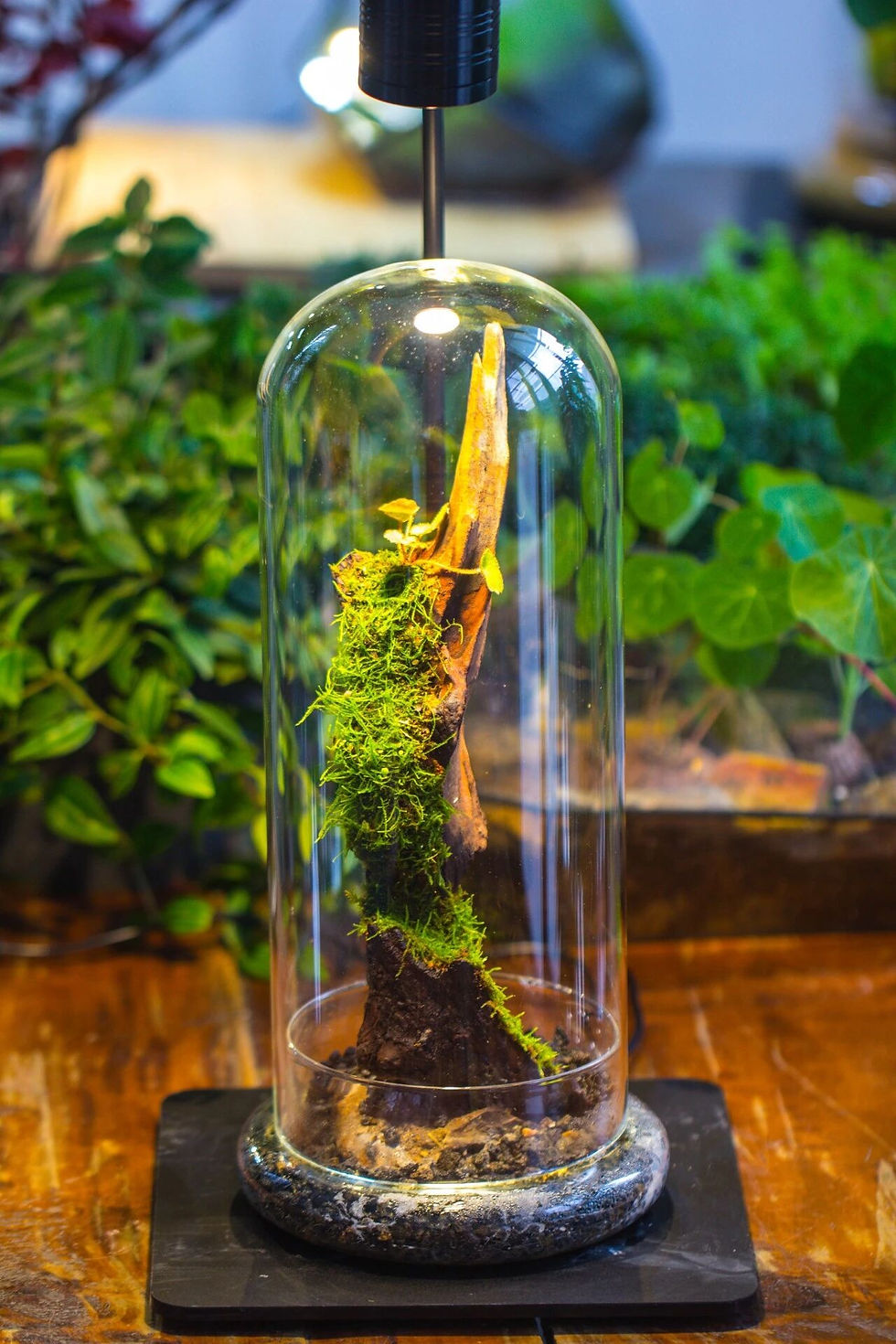
Recently, I shared several moss terrarium projects where the moss was placed directly into the gaps between rocks and wood. The final effect looks like the moss is naturally growing on the rocks or wood. So I also call this style “moss on rock” or “moss on wood.”
Some people were confused and asked after watching my tutorial video:
Why do you add sphagnum moss?
Can it really hold the moss in place?
Will the moss die quickly?
Is the red material you applied clay?
Does the moss not need to be glued?
etc.
The basic logic is this:
Both red clay and sphagnum moss can help hold moisture. Using them is usually better than using nothing.
Red clay should only be used in a moist environment. Sphagnum moss has fewer limits.
For these moss-on-rock and moss-on-wood projects, the main idea is to fix the moss in a higher position. The method mainly depends on the depth of the gaps and the weight of the moss.
If the gap is large and deep, you can use either clay or sphagnum moss to fill it.
For very light moss, such as the small sheet moss shown below, the wood itself does not really have many gaps. But the moss is very light, so I only needed to apply a thin layer of red clay on the side of the wood. It holds very firmly.
The next two terrariums are similar. The angle is almost 90 degrees, but the wood still has some grooves.
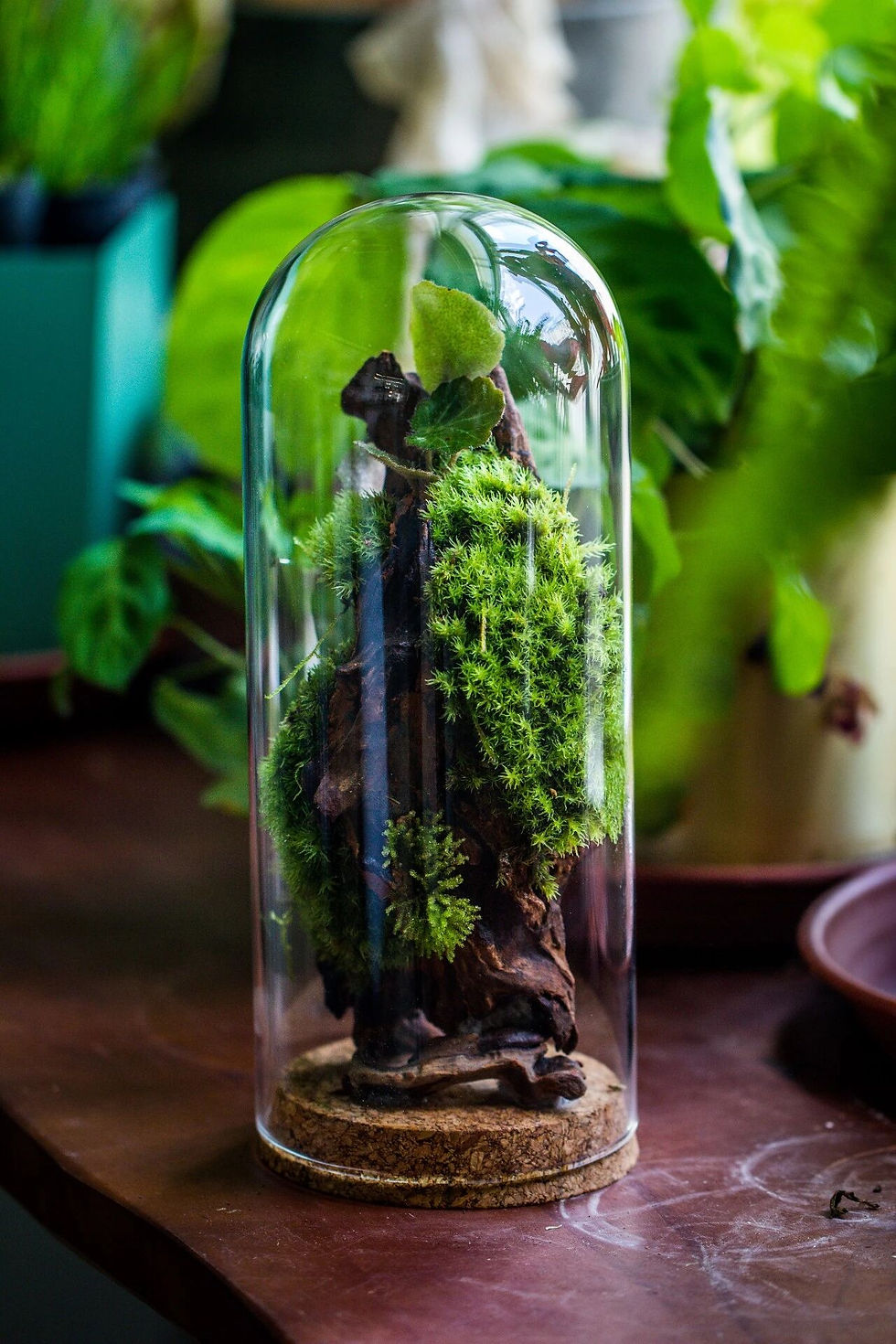

The moss here is Leucobryum moss. Leucobryum is a larger and heavier type of moss. In this case, red clay is definitely needed. The clay also needs to be thick and sticky, with a thicker layer applied to hold the moss in place.
In the below terrarium, the gap I left was large enough, and the moss I used was also very light.
I needed something to fill the large gap so the moss would not sink too far into it.
In this situation, the moss will not fall down. It does not really need to be glued inside the gap.
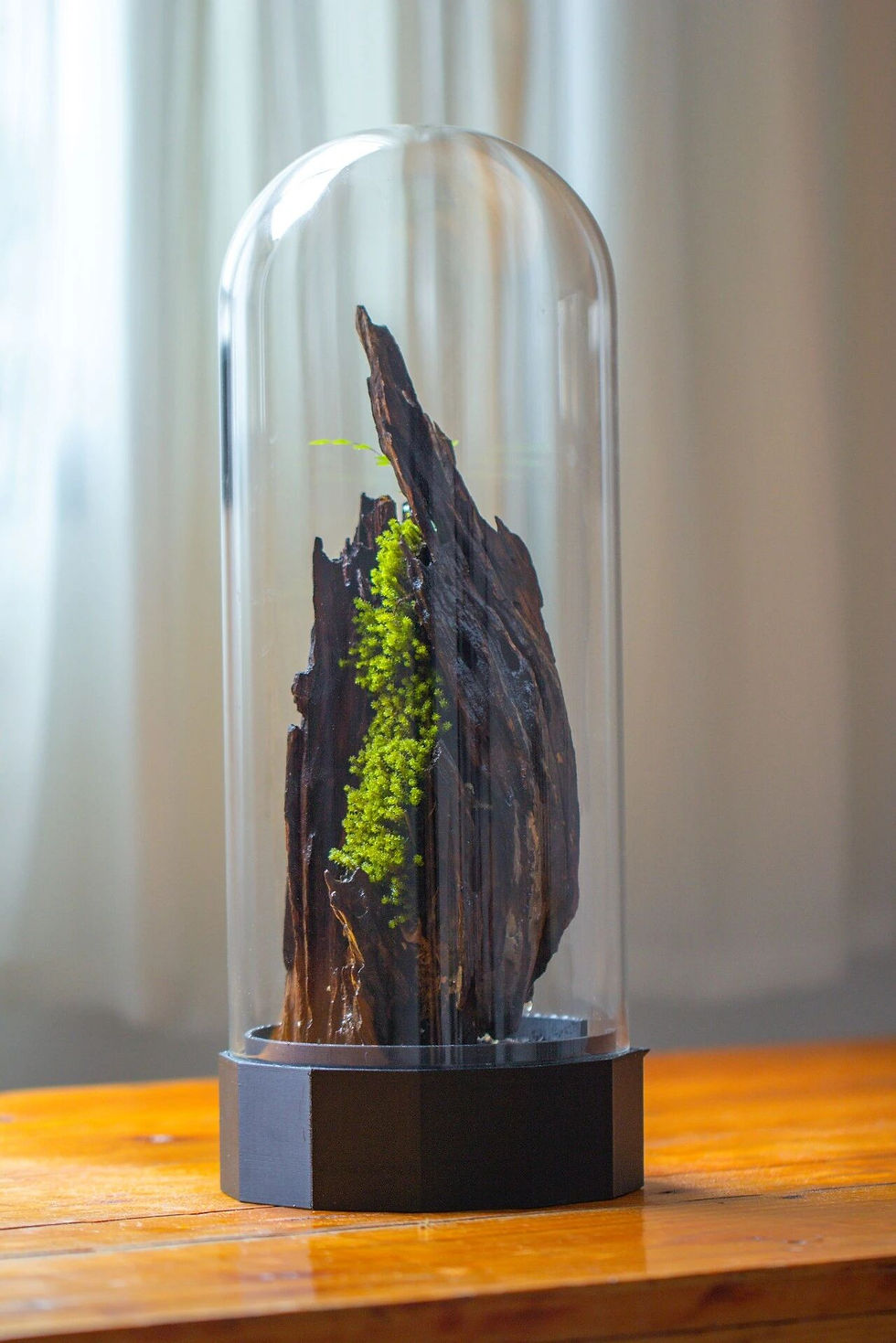
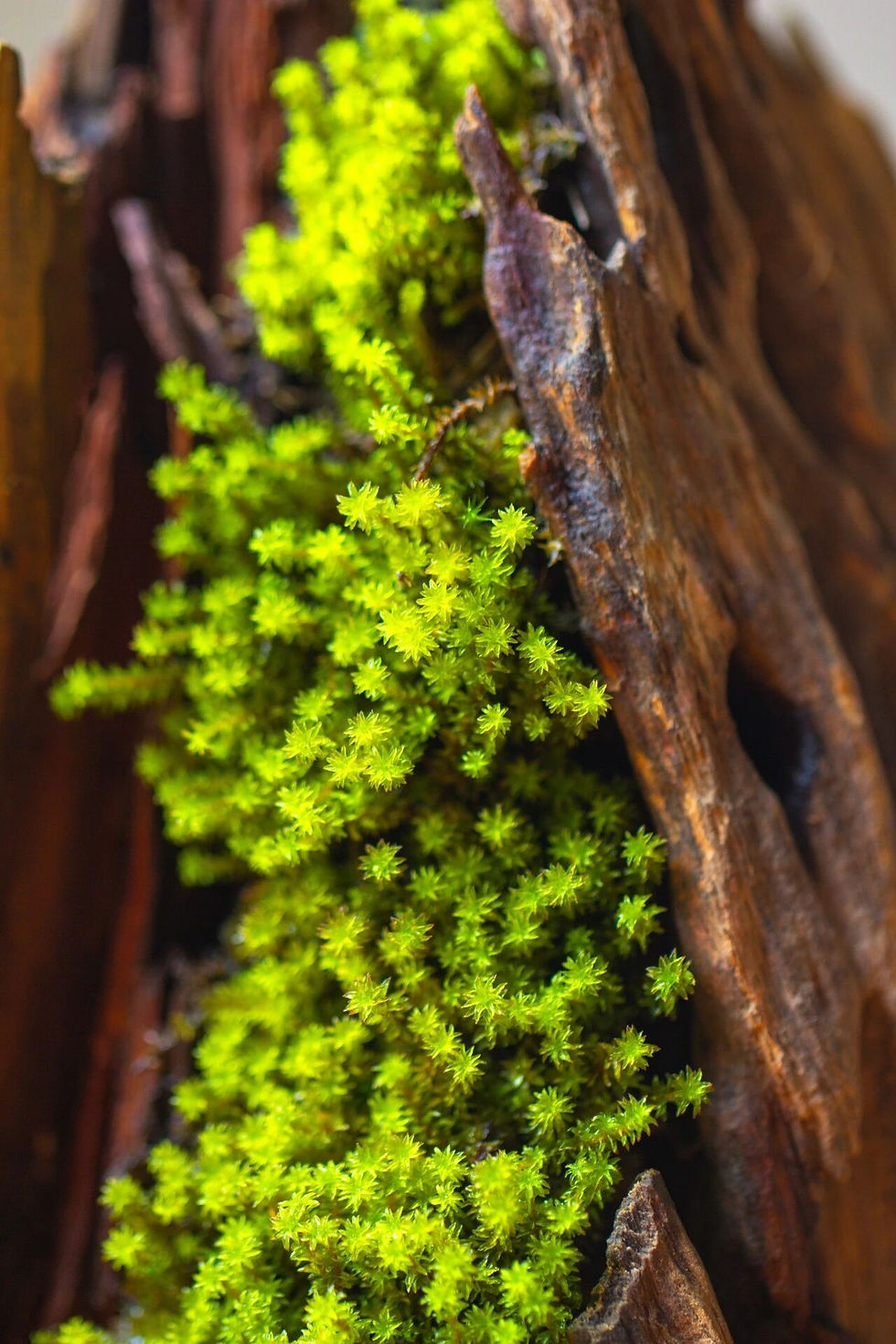
I chose sphagnum moss because this is much easier than using clay.
But please note: clay is much more durable than sphagnum moss.
In this setup, the moss is simply placed between the pieces of wood. It is held in place by the gap itself.
In the below terrarium, Leucobryum moss was used.

Leucobryum moss is heavy, but the gaps between the rocks are not large, and there is not much slope. The rocks are enough to hold the moss in place so it does not fall down.
So I only used sphagnum moss to fill the larger gaps between rocks. The moss itself is held between the rock gaps.
Now let’s go back to the Fissidens moss terrarium I shared a few days ago.
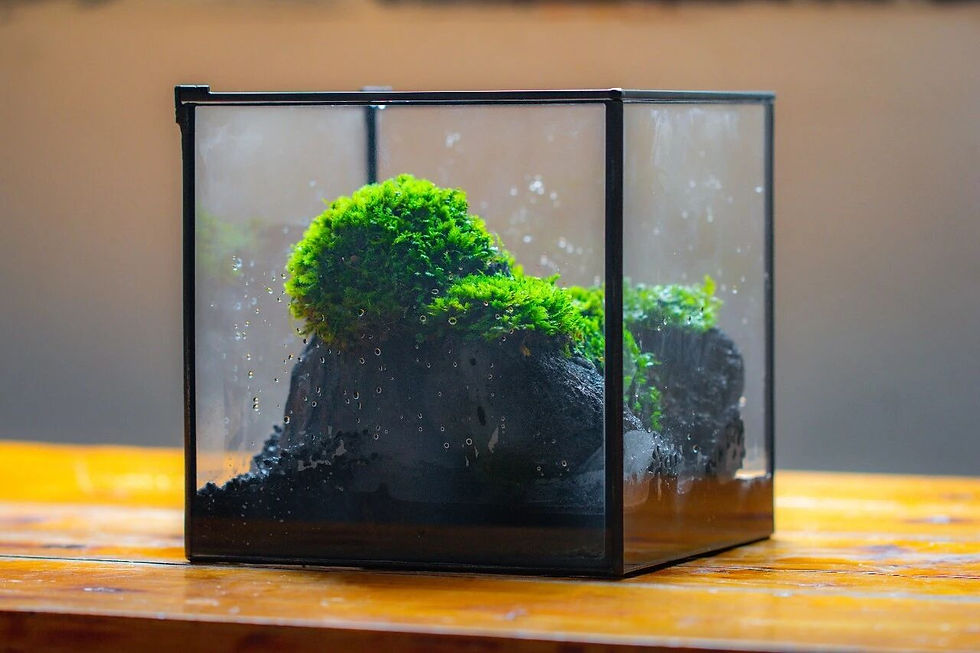
In that project, I also used sphagnum moss to fill the large gaps between the rocks. The purpose was to stop the muddy soil on the back of the moss from falling into the water and making the water dirty during watering.
The surface of lava rocks is naturally rough and the back of the Fissidens moss already had clay on it.
So in that terrarium, the Fissidens moss is actually attached to the lava rock by the clay on the back of the moss.


Comments